

Podcast Episode
Theo Baker is no ordinary college senior. His student newspaper articles brought down Stanford’s president. Now he’s written a book about the making of the young tech elite.
Jon Bateman, Theo Baker
Marwan Muasher—a former foreign minister of Jordan and now a VP at the Carnegie Endowment for International Peace—joins The World Unpacked to make sense of a region in flux.
Invalid video URL
The wars unleashed by October 7th have left the Middle East deeply fractured—Iran battered and defiant, Gaza destroyed, Israel militarized, the Gulf insecure and divided. And an even bigger disruption lies just ahead: the oil revenues that built the modern Arab world will halve by 2050, forcing countries to redesign themselves.
Marwan Muasher—a former foreign minister of Jordan and now a VP at the Carnegie Endowment for International Peace—joins The World Unpacked to make sense of a region in flux. He explains why Washington should get tougher on Israel, Gulf countries may already have peaked in power, and the end of oil could be a good thing.
Note: this is an AI-generated transcript and may contain errors
Jon Bateman: If you're confused and exhausted by events in the Middle East, you're not alone. I spent years studying this region as an intelligence analyst, and even I've felt overwhelmed lately with the sheer number of conflicts and subplots. October 7th unleashed a chaotic spasm of violence involving almost every major player. Hamas, Israel, Iran, Hezbollah, Lebanon, the Gulf states, the Houthis, and more. But what does it all add up to? What are the basic stories and themes that make sense of this perplexing region? For answers, I spoke with someone who knows all the players and played his own part in the deep history that brought us to this point. Marwan Washer was the foreign minister and deputy prime minister of Jordan. He's been involved in Palestinian and regional peace processes for decades. Marwan walked me through each one of the major hotspots and power centers. But we also talked about the underlying forces that make today's Middle East what it is. Like the fact that there are just too many countries and groups vying for leadership. No single force powerful enough to organize them all or force negotiations. And Marwan told me that the real disruption is still on its way. The decline of oil is coming soon and we'll transform everything we think we know about the Middle East. I'm John Bateman, and this is The World Unpacked. Marwan Washer, welcome to The World Unpacked. Thank you. A lot of people think that we're in a new Middle East of some kind, that October 7th was a differentiator between the Middle East of the past and the Middle Eastern of the present and the future. Do you agree with that? Has the Middle east been transformed in the last few years? If so, how?
Marwan Muasher: A lot of people had hoped that particularly with the war on Iran, you might see a Middle East which is more stable, more peaceful. If that is the hope, then I'm afraid that we don't have a new Middle East. The new Middle East that we are looking at is more divided, more fractured. The war on Iran has resulted in deeper fissure between Gulf countries, particularly Saudi Arabia and the Emiratis who have a different view on how to handle Iran, how to handle the United States, and how to hand Israel. And October 7 also has brought back in my view the importance of solving the Palestinian problem if we are to result in a stable Middle East. There was a time when The international community felt that the Abrahamic Accords were a way to bypass the Palestinian problem, to focus on regional peace, and in doing so, maybe induce a better atmosphere to resume Palestinian-Israeli negotiations. That has not happened. October 7 and its aftermath. Has made it clear that you just cannot ignore looking at the Palestinian problem and trying to solve it.
Jon Bateman: You mentioned three different hot spots there. The war in Iran, the Israel-Palestin question, the Gulf countries. I want to tour through each one of those. Maybe we could start with Iran. Right now, we seem to have a kind of fragile ceasefire. The Strait of Hormuz is still shut down in some sense. In what ways do you think this war has altered? The foundations of the power and security architecture in the Middle East. I mean, it's too early to say the precise contours of any kind of negotiated outcome. But what do we know has changed going forward? All the...
Marwan Muasher: Wars, conflicts in the Middle East over the last 40, 50 years have pointed out a very important fact. We need a regional security architecture in the region. All other regions of the world have been able to develop such architecture, which is crucial to prevent conflicts before they occur or to manage them once they occur. What do you mean by security architecture? What does that include? What does it do? You need some form of an organization that brings together all countries of the region to be able to discuss their problems, discuss the conflicts before they become unmanageable. We are witnessing conflicts. Every few years, there's a major conflict in the region. And there is no proper mechanism to address these conflicts. Regionally and try to minimize them in the future.
Jon Bateman: Are we just looking for a diplomatic forum where people can get together and talk? Are you thinking about military alliances that can deter conflict and channel these adversarial relationships into some kind of clearer, stable form?
Marwan Muasher: It's difficult to talk about a military alliance today between, let's say, Arab countries, Iran and Israel. I mean, that's not realistic. But a diplomatic forum, some kind of a forum to discuss problems where people from all sides can at least sit together around a table and discuss these problems. Yes, this is not a new idea. It has been talked about for decades, but unfortunately, it has not been realized.
Jon Bateman: One argument I've heard over the years is that Iran itself could be a kind of focal point in that most other countries in the region don't like Iran or afraid of Iran. And so maybe Iran as a common enemy can actually be a co-hearing force that seemed to be part of what has drawn Israel and the UAE closer together. And was part of the dialog with Saudi Arabia, potential normalization that seems to now be on the back burner. Now, Iran is a shattered country, but it's not going away. Do you still see that as an organizing principle or axis that can bring countries together around a common enemy?
Marwan Muasher: Iran has not played a positive role in the region, that's for sure. Iran has a lot of proxies in countries like Iraq, Lebanon, Yemen, you know, the Houthis in Yemen, Hezbollah in Lebanon, the Shi'ite armed groups in Iraq, etc. And as somebody said, Iran is still behaving as an ideology, not a state. Their main objective is to export this ideology. Regardless of the pain that you know they have to suffer as a result of international sanctions At the same time, Iran is a neighbor, and you just cannot just wish it away. You have to deal with it in one form or the other. I think the problem with the latest war is that the Trump administration felt that Iran might be just another Venezuela, Venezuela 2.0, as is often said. That by decapitating the head. That you are able to subdue the whole system, that of course has not happened. Iran is very well entrenched, the system is very well entrench. It is not dependent on one person alone or five or ten or fifty. And as a result, if you are not able to achieve regime change, and regime change as we all know cannot be achieved without ground troops. You are not able to do so then you will have to find another way of dealing with Iran. It might not be you know easy to do that but it is certainly in my view better than hitting Iran with no clear objectives and now we are left in a situation where the case scenario now is to reopen Straits that were anyway open before the war. In addition, today you know Gulf countries feel that military bases, U.S. Military bases in the Gulf have not really defended them against Iranian attacks and so there is a whole revisiting if you want that is being done in the gulf today about how to deal not just with Iran but also with the United States after this war and Different countries have different views on how to do that. The Emiratis want to double down on the relationship between them and both the United States and Israel. The Saudis are taking a more cautious approach towards Israel and towards the relationship with the U.S. So we are still in flux. The war is not over yet, and the ramifications of this war have not become all that clear yet.
Jon Bateman: If we wind back the clock a few years, the Middle East was certainly a dangerous place, but there was a kind of uncomfortable detente. So Israel and Iran were hostile to each other and had proxy conflicts surrounding Hamas and Hezbollah, but they seemed to fall below a certain threshold. Now, all of these things having been exploded into open warfare, the Strait of Hormuz threat finally manifest. Iranian missiles actually hitting Gulf cities. Israel actually attacking Hezbollah in Lebanon. The fear factor amongst all these major players is so much higher than it was before. How do you then establish a sense of, I don't want to say trust. But stability after all of these violent ructions.
Marwan Muasher: I don't have hope that such talks can take place now. In fact, the war on Iran has made it very, very difficult for any Gulf states to initiate talks with Iran, and that goes with Israel also. With the exception of the Emiratis, most Arab states now feel that Israel has expansionist policies. Israeli officials have repeatedly said that they are not satisfied with their own borders, they want to expand these borders. Kind of policy that makes it very difficult to talk. And yet, John, and yet, what is becoming clear after all these conflicts is that no single country is able to pacify the situation, not even the United States, which actually has made things rather worse, because it did not have a clear strategy. So. My hope is that once a serious revisiting of policy is made among all countries of the region, that they will come to understand that something more collective needs to be done rather than each country doing it on its own. Such a loose coalition actually is starting to form. So like-minded countries, not on all issues but at least on some issues like Saudi Arabia. Qatar, who were enemies only a few years ago, Egypt, Jordan, and a non-Arab country, Turkey, are today coordinating their positions much closer than before, are today trying to form a loose coalition. It's still too early to know whether such a coalition is solid and will last. But I think there is the start of a realization in the region that some form of collective action needs to be done.
Jon Bateman: Some people might hear terms like diplomacy, coalition, collective action, it may feel abstract to them. To you, this has been part of your career. You were a diplomat in Jordan, foreign minister, deputy prime minister. You've been part of these types of conversations in a real concrete way. Tell us about what you learned from those experiences.
Marwan Muasher: You know The first, I think, lesson that most diplomats learn is that diplomacy moves slowly. Okay, if you are in for some quick wins, you will be very surprised. And so you have to look at history also. I mean, France and Germany in World War II were bitter enemies, and even before World War II. Today they cooperate on a number of issues. They're both part of the European Union. Doesn't mean that all the problems are solved, but it does mean that people and countries can move beyond conflict. It is not impossible. Saudi and Qatar were bitter enemies only seven or eight years ago. The Saudis were had a blockade against Qatar where you know, no airplanes could land in Qatar, no land routes were allowed, etc, and today they are cooperating, you know in a very close manner. So it is not determined that conflicts will stay forever, and that gives diplomats hope, but you cannot just wish that this happens. You cannot wait for such cooperation to take place. You have to work for it, understanding and realizing and accepting that you're not going to see results anytime soon. I was, for example, the first ambassador to Israel after Jordan and Israel signed peace treaty among them. The problems did not end with the peace treaty. In fact, today I can say they are worse than before, but that does not mean that one should stop working for a settlement that will eventually bring peace to the region, but it's just not going to do that in 10 or 20 or maybe 40 years.
Jon Bateman: There's an interesting parallel between your story about being the first Jordanian ambassador to Israel after normalization of ties and the situation now with the Abraham Accords, where the UAE is now new into a normalized period with Israel. A lot of Americans would look at the Abraham accords and say, this is one of the major diplomatic successes in the Middle East in the last few years. It brought two formerly uncomfortable countries closer together, both of them are clearly aligned with US interests in a number of respects, not all. I guess you could also say that other actors in the Middle East, namely Hamas and Iran, were so threatened by the Abraham Accords and the possible inclusion of Saudi Arabia, the idea that that could become the basis for the security architecture that we've been talking about, that that led, many people believe, to October 7th and all of the violent ripples that we have seen from that. So, I guess my question is... What's your assessment of the Abraham Accords? Is this a major diplomatic achievement and a model for how this region can move toward a security architecture? Or did it somehow exacerbate the tensions and contradictions within this volatile region?
Marwan Muasher: So John, on the surface, of course, I totally understand why people will look at the Abrahamic Accords here and will say, wow, this is good. You know, who can be against regional peace? Who can be against regional reconciliation between parties? But if we look deeper, What the Abrahamic Accords have done is to bring peace. Between countries not based on solving the core issue in the region which is the Israeli occupation of Palestinian land but in bilateral agreements that will further economic and security ties among the countries that have signed them but that totally ignored the Palestinian issue What did this do? It created a false impression. That the region can be quiet and peaceful, and indeed for ten years, maybe five years at least, since the signing of the accords, the region was peaceful, not because the problems went away. And October 7 was a clear, clear indication of that. There is no justification for the killing of civilians. Civilians, whether they are Israeli or Palestinian in my view, but in my view also there shouldn't be a justification for the occupation. The problem did not start with October 7, it started with the occupation, that is the problem with the Abrahamic Accords, it gave people a false sense of security and peace that was shattered in October 7.
Jon Bateman: Yeah, the accords were an attempt to sidestep the Palestinian issue by Israel, the United States, the UAE, other supporters. It's interesting, for an American of my generation, I would often grow up and hear the term Middle East peace process to refer specifically to Israel-Palestine. So there was a kind of implicit understanding in Washington and America that Middle East peace, the original peace. Thank you. Is centered on the Israel-Palestine question. You actually don't hear that phrase as much anymore in America because of this desire to kind of move on from the Palestinian issue. But of course, that's no longer possible with October 7th. Where do you see this issue now moving forward? Obviously, there's been a devastating war in Gaza. The territory is virtually destroyed. The people are displaced. They're still... Some level of combat happening there in a fragile truce. How do you see this unfolding going forward?
Marwan Muasher: Me take you back John 30 plus years when the Madrid process started when the American administration then George Bush senior realized that conflicts cannot go on in the Middle East without trying to solve the Arab-Israeli conflict and so the process started. What was that process? The Americans brought Syria, Lebanon. Palestinians and Jordan together with Israel in a process that promised to end up in peace agreements among all these countries. And then the Palestinians and the Israelis recognized each other and started what has become known as the Oslo Process. The Oslo process, which was an agreement signed between the Palestinians and the Israelis in 1993. It promised a five-year negotiations process, after which a solution was to be formed. The process did not specify what that solution would look like, but it promised a solution that of course to most people, at least on the Arab side, meant a Palestinian state, a two-state solution. So by 1999, we were supposed to have a two-state solution, an Israeli state and a Palestinian state.
Jon Bateman: Said by 1999, so we're here in 2000.
Marwan Muasher: So now you look at the situation now, 2026, we are not just further away from a two-state solution. The number of settlers in the West Bank and East Jerusalem, which was 250,000 at the a two-state solution which is premised on the idea of separating the two communities into a Palestinian state and an Israeli state is no longer possible. The reason a lot of people, as you said, want to move on is that people have given up. People outside, you know, in the international community don't see any process and have given up. People inside, meaning Palestinians and Israelis, have given up on the idea that negotiations can bring them peace. That is one of the reasons that led to October 7. And of course, post-October 7, you have hard-line positions on both Israelis and the Palestinians. Today there is more than 80% of Israelis who do not want a two-state solution. And there's a very very strong majority of Palestinians who still want a piece two-state solution but don't believe it is possible anymore. How do you operate with these parameters? It's very very difficult today. It's very difficult to talk about initiating a new process because neither Palestinians nor Israelis believe that any amount of negotiations is going to result in them reaching an agreement.
Jon Bateman: You're listening to The World Unpacked with John Bateman, where we dive deep into pressing global issues and make sense of the big forces shaping our world. Have you learned anything so far that intrigued or surprised you? Let me know in the comments or just give us a like. And if you want to hear more of my conversations with the world's most informed and interesting people, you can subscribe right here. Now back to the show. It's a fascinating history you just told, because... Kind of sounds like a different world. I mean, the Madrid process, the Oslo process, this idea that European capitals are where this diplomacy might happen, and that maybe somehow the key to solving it would involve bringing in other Arab states that maybe have some leverage over the situation. It seems to me, and I wonder if you agree with this, Israel has decided that it alone has overwhelming leverage over the Palestinian issue. That it has the capability of exerting military dominance over Hamas to force its will, and that outside parties, Europe, the international community, certainly the United States, simply aren't going to be a major constraint on Israeli behavior. And that this maybe is not just the view of the Israeli security state and the elites, but kind of the population as a whole, that there seems to be some sort of consensus with an Israeli society, that Israel itself. Can simply control the fate of the situation. Is that an accurate assessment?
Marwan Muasher: It's a very accurate assessment, John. Israel today has decided to be militarily, is militarily dominant, not just against Hamas, against all Palestinians, against Syria, against Lebanon. It believes that it can sustain itself through military dominance. I mean, in other words, it can continue to exist by brute force. That is, I think, not just in my view, but in the view of most historians, not sustainable. No other country in the world has been able to exist by brute-force indefinitely. Today the major challenge for Israel is not external. It is internal. When Israel was created in 1948, if I can go back to some history, the number of Israeli Jews, most of them who came from the outside in 1948 was 650,000. The number of Palestinians who stayed on their land who were not forced out after the war in 1948 it was 150,000, so 650 to 150 was manager. You look at the situation today. There are 7.5 million Palestinians living in areas under Israel's control. That includes the 150,000 that became 2 million, and the rest are under occupation by Israel, compared to 7.2 million Israeli Jews. In other words, it is no longer manageable. For a minority to rule over a majority in what many many people around the world today are calling an apartheid system. Now this situation was ignored, maybe is still being ignored by the international community because of the hope that a two-state solution might emerge and then the question would become moot. But if it becomes clear and I think it is becoming clearer by the day that a two- state solution is no longer possible, then the international community will have to deal not with occupation but with apartheid. That's the dilemma, that's the challenge that faces Israel today. No matter how militarily dominant it is, it is not going to be able to arrive at peace for Israel. Forget the others without solving the internal problem now that exists with Palestinians.
Jon Bateman: So if you view the Israel policy in the Palestinian territories as unmanageable, unsustainable, not something that history shows can stand over time. What are the specific forces that can disrupt the status quo? Because I think there's people in Israel who sort of plan for the status quote to continue indefinitely. They seem to have the cards. Who are the actors? And what are the leverage points that can be brought to bear to disrupt this? And you mentioned the international community. Are we talking about a future democratic administration in the United States? Does Europe still have f***? Leverage here, regional powers other than the UAE, can they somehow alter this dynamic?
Marwan Muasher: So there are two major factors in my mind. One, I already talked about, which is demography. Demography is going in the end to force the Israelis into a solution because they are not going to be able, in my view, to maintain an apartheid system forever. The international community want, because look at South Africa. In the end, the international community could not tolerate. Apartheid brought sanctions upon South Africa took a long time but in the end it was South Africa that decided this is not sustainable and that is the other factor the international community you look at public opinion around the world and it is a fact today that the younger you are in age the more likely you are to criticize Israel or to support Palestinian rights. That is a growing phenomenon. But if you want to bring it closer to the United States, last month, 40 Democratic senators out of 47 voted to block arms sales to Israel. If you had told me this five years ago, I would have said it's impossible. Today there are some people running for Congress who are boasting almost that they are not getting money from AIPAC. When did we ever think this would happen? It used to be that if you didn't get support from AIPAK you had very little chance in certain states. All that to say that I do think that public opinion is changing not just around the world, but here in the United States. The latest Pew survey shows that 60% of Americans, 60% this year, view Israel negatively. 80% of Democrats and 57% of Republicans under 50 years of age. That's significant and unprecedented. It has not yet resulted in a change of policy towards Israel. But in my view, any administration, any democratic administration that comes, it's not going to flip its position on Israel 180 degrees, but it's going to be far more critical of Israel and demanding more accountable measures than any democratic administration before.
Jon Bateman: Yeah, the politics of Israel within the United States are fascinating. On the one hand, it has become a more partisan issue. There's a clearer differentiation between the Democratic and Republican approach. But in both parties, there seems to be a rising tide of discomfort and hostility toward Israel. In the Democratic Party, the anger over Gaza, especially amongst the activist base, is so extreme that it's difficult to imagine. A presidential candidate from the Democrats in 2028 emerging without in some way disassociating or taking a stand against Israel's policies toward Gaza. And then on the Republican side, of course, Trump is friendly with Netanyahu. There are still close alliances there in the Republican power structure. But it sort of seems like all of the energy, the grassroots dynamism from the and other populist forces online and elsewhere. Is also hostile to Israel. Tucker Carlson would be a great example of this. So. Let's imagine a scenario in which the US administration is maybe the toughest on Israel of any we've seen in our lifetime. What would they do? What should they do to exert some kind of pressure on the Palestinian question? What are the tools that they have and what are the goals that they could be trying to achieve? Both President...
Marwan Muasher: George Bush senior and President Clinton, a Republican and a Democrat, pushed very heavily towards negotiations that resulted in an agreement or that they hoped would result in an agreement. And frankly, both came close. In the end, you cannot force an agreement on anyone, but you can create the conditions, you can induce the parties to be able to reach an agreement. President Clinton, for example, proposed what became known as the Clinton parameters, meaning the overall framework for what an agreement might look like, but leaving some of the details to the two parties to negotiate. I think, you know, it is not impossible to imagine a scenario where the administration would say, look guys, you've been fighting for too long. We all know what the solution looks like. A Palestinian state on the majority of the West Bank and Gaza and East Jerusalem with minor and reciprocal maybe adjustments at the border. Disarming of Hamas etc. I mean I don't need to repeat all that. The parameters are by now well known. There has been no political will to implement them so the international community for the longest time kept saying we are for a two-state solution but never paired it with an actionable plan to implement it and so what Israel did is it gave nominal acceptance to the two-state solution before. They no longer do that while building more settlements and you know rendering that two-states solution impossible. So it's not impossible for the United States to do that. We are already witnessing several European countries who are starting to apply sanctions, not for example receiving goods from settlements. Not sending arms to Israel, that is going to, in my view, expand in the future, not the opposite. If Israel keeps insisting, like you said, on military dominance and no solution.
Jon Bateman: Might we see those kind of tough measures from the United States in the future? I mean, we've been talking about a negotiating dynamic between Israel and the Palestinians where both sides are far more dug in than ever before. And so if an American president hopes to unglu this situation, is he or she going to have to deploy a level of coercion beyond what we've seen before, stopping arms sales or aid, threatening sanctions. Even maybe offering some sort of military solution of its own, creating an international peacekeeping force, a governing council, just sort of putting more skin in the game. Absolutely.
Marwan Muasher: I mean, this idea of the United States pressuring Israel is seen as a taboo in today's politics. That's not true in the past. The United States has pressured Israel a number of times. Carter has pressured Menachem Begin on Lebanon. Reagan has done the same. Remember when... When Secretary of State Baker told Shamir in a big press conference, you're not serious about peace. If you are serious, this is my number. But George Bush Sr. Withheld $10 billion in aid to Israel because they were going to use it to build settlements. I mean, this pressure against Israel is not unprecedented. You lack the political will today to do that. And there is another factor. Most American administrations, in fact, maybe most administrations worldwide, put the blame squarely on Netanyahu. If we just get rid of Netanyah, we will get an Israeli government that is more open-minded about peace. That's not true. Today, the alternative to Netanyahu, if he loses in the elections in October of this year, is Naftali Bennett, who is far more hardline on the peace process than Netanyah is. The sad problem today is that there is no real constituency for peace among Israeli society today, not just among the pro-Netanyahu camp. When I was ambassador in Israel, John, labor had 40 members of the Knesset. Knessets has 120 members. 40 were from labor. Merit, which is the leftist party working for peace at the time, had 12. And the Arabs had eight. So these three forces had 60, had half the Kinesset. And you could then talk about the peace process and reaching agreement with the Palestinians. Labor has four members, Maradz has zero members of the Knesset, and the Arabs had ten. There is no constituency for peace. Once the international community, let's say a new democratic administration, realizes this and can no longer use the excuse that it was just Netanyahu who was standing in the way, they will have to start thinking of other measures.
Jon Bateman: Yeah, Israel is a very divided and polarized society, much like the United States in some respects, but on the issue of the Palestinian question and security in general, there's a lot of unity there. Okay, so we've been talking about the Israeli side of this political equation. What about the Palestinian side? I think just as a starting point, the question is, who's in charge of the Palestinians? I mean, we obviously still have a Fatah regime in the West Bank. In Gaza, is there... A coherent political structure or leadership of any kind, who would one negotiate with there? If you look at the polls.
Marwan Muasher: Hamas is far less popular in Gaza today, and it's understandable because of all the destruction that has taken place. But Fateh also does not have the support of a lot of Palestinians. President Abbas today has, according to all polls, about 10 percent support. Oh my God. And so if we talk about, you know, who represents the Palestinians, only elections will tell you. That and we've not had an election in either place in some time the Palestinians the Palestinian Authority doesn't want elections because they know they will lose Israel doesn't won't elections because there are afraid that you know, it might result in Either Hamas or with people that are ready for compromise because Israel today is not ready is not willing to have a political compromise and America is not ready, does not want elections either. So the problem is everybody today talks about the need for a reform to Palestinian authority. But how is that reform going to take place other than elections? Nobody is willing to answer that point.
Jon Bateman: Yeah, and I think something that's undersold amongst Americans and others who are sympathetic to the Palestinian cause is the violent repression of politics that the Palestinian leaders in both territories employ. I mean, these are not democracies, effectively. They haven't had elections in many years. Hamas, as far as I can tell, doesn't allow alternative political movements to flourish within Gaza. Is that still going to be true going forward? I guess the Israelis and others maybe would hope that they have so decimated the armed capacity of Hamas that not only is it receding as a threat to Israel, but maybe it's receding in terms of its monopoly on violence and governing capacity within Gaza. Is that true? John, one.
Marwan Muasher: There is no monopoly on violence with the Palestinians because what Israel has done, you can argue, is far more violent than anything Hamas has done. Gaza has been decimated. The south of Lebanon has been Decimated. I mean decimated, it's like not a single building is still there in south Lebanon or most of the buildings in Gaza. Now I agree with you totally. I mean, in the end. Both sides will have to give up violence. There is no way you can arrive at a peaceful settlement while violence is taking place. But we have seen such cases in the past. Ireland, Northern Ireland is a case. I mean, the IRA was not just violent. It was seen as a terrorist organization throughout the world. Today the IRA is part and parcel of the Irish Parliament. So it is not impossible for people to give up violence, but you have to give them a political horizon. You cannot tell them just, you know, abandon violence, but we can't promise you anything in return. There has to be a horizon. We have, I have argued this case so many times. Without a political horizon, it's almost utopic to talk about people abandoning violence on their own.
Jon Bateman: After October 7th, in those early months, there was an interest in potential fissures that were opening up between Hamas and the Gazan people. There was maybe a sense, at least in the West, that some portion of the Palestinian people felt betrayed by Hamas's reckless decision to invite this extraordinary retaliation from Israel that virtually destroyed. The infrastructure and led to so many deaths. Are you sensing, in Gaza specifically, a backlash to Hamas and any kind of pressure, either pressure on Hamas itself to govern or behave differently, or the emergence of other kinds of ideologies, movements, and ideas about how Gaza should be governed and its relationship for this reel.
Marwan Muasher: There are two sentiments. One is what you talked about. You know, many people are angry that they have lost their homes, they have lost their livelihoods because of what Hamas did. That's certainly the case, and Poles all show that. There is another sentiment which says, at least Hamas brought back the issue to the forefront. You know, before October 7, nobody cared about the Palestinian issue for a long time. There were no negotiations between Israelis and Palestinians since 2014. And at least, you know, yes, the price was heavy, but at least they brought back the issue to the forefront. At least it resulted in international sympathy for the cause of Palestinians, etc. Moving beyond this, If we want people to really, you know, abandon the idea of violence, as I said, you have to give them hope for a political solution. Today, the American administration talks about a board of peace, quote unquote, that is principally preoccupied with supposedly the reconstruction of Gaza, does not talk about political horizon does not talk about ending the conflict. And even the reconstruction of Gaza has not taken place. And so without such horizons, people are still going to be divided between their anger and between their also feeling that somebody is at least looking after their political aspirations. We need to encourage the second part and discourage the first. But... In order to do that, once again, I cannot overestimate the need for a political horizon.
Jon Bateman: What's the role of Gulf countries in such a political horizon? Prior to October 7, there was talk of Saudi normalization with Israel, and that this was often kind of floated as a leverage point on the Palestinian issue. Maybe Saudi Arabia could dangle a closening of ties with Israel in exchange for some kind of positive action on Palestine. Is that still a relevant shit on this bargaining table?
Marwan Muasher: Yes First of all, when we talk about a Gulf position, we need to understand that there is no unified Gulf position on any issue frankly, but certainly on this issue. You have the, if we want to take let's say the the two extremes, you have the Saudis on one hand and the Emiratis on the other. The Emiraties have decided to disengage the Arab-Israeli conflict from their foreign policy And so... The Emiratis have taken a conscious decision to improve ties with Israel, regardless of what it does on the Palestinian front. That's one position. That's actually not in line not just with the Saudis, but with probably every other Arab state. This is how it is. Have made it repeatedly clear John, privately and publicly, they are not interested in signing an Abrahamic Accord type of an agreement. Why? Because the Abrahamic accord does not include a land for peace component. Remember the Saudis were the originators of the Arab Peace Initiative, which is a collective proposal by all Arab states. Have a collective peace treaty with Israel in return for Israel withdrawing from Palestinian and other Arab lands. And so the Saudi position today is we are not against normalizing with Israel but in order for us to do that we need to see a credible path towards the establishment of a Palestinian state. Not even a Palestinian state as a precondition, but at least a credible path towards it. Despite the fact that both the Biden administration and the Trump administration kept saying we are very close we are, very close to signing an agreement. Such an agreement did not materialize because Israel would not commit itself even nominally to such a statement to be included in the agreement and that remains the Saudi position today. Yes, we will normalize, but in return for a credible path towards a Palestinian state, something which I think is not to be expected.
Jon Bateman: Shorter. I think that can bring us from the Palestinian question and the Gulf role in it to a focus for the rest of this conversation on the Gulf itself. It seems like on the one hand, Gulf states are far more powerful than they were in the past. They are centers of gravity, to an extent that was not true in some of the historical moments that we've been describing. But also, you've described fissures opening up inside of the Gulf. We saw recently the UAE announced its departure from OPEC. There's been almost like a proxy battle happening in Yemen. There seems to be some sort of interpersonal conflict between the leaders of the UA in Saudi Arabia. And then, of course, there's Qatar and others. How do you see the role of the gulf today and these fissure within it?
Marwan Muasher: I want to point out two points, John. One is there is no question that the center of focus in the Arab world has shifted from its traditional position, which was Egypt, to the Gulf. Today, the Gulf is the central focus in Arab world. It's no longer traditional countries like Egypt. And that is because of, you know, the energy factor, because of the relationship with the United States, because of the internal problems today facing Egypt, etc. That's point number one. Point number two is we are approaching what I will call the post-oil era in the Arab world. Oil is not, is still there, but The World Bank, for example, estimates that by the year 2050, revenues from oil to the Gulf countries are going to be cut in half. That's tremendous. What's driving that? Is it the shift toward electrification? Absolutely. Today, you know, the United States is a net exporter of energy, if you include solar energy and other forms of energy. So demand on oil is receding. China is electrifying at a very very fast rate. What does that mean? It is not simply an economic issue. Gulf states were, in the past and until now, welfare states, giving their citizens all kinds of subsidies, but in return for no say in decision-making and running their country's affairs. Oil importing states like Egypt, like Jordan, relied on the revenues coming from oil in oil producing countries, whether in the form of you know, right of assistance from these countries, or whether in the form of their own labor forces going to the Gulf and remitting money, etc. That error. Is drawing to a close. That is going to mean that all countries in the Arab world, which have suffered from a basic problem of lack of good governance, whether in oil producing countries or in oil importing countries, will have to take decisions. The loss of revenues is going change state-citizen relations. It's going to change the social contracts in these countries. It's going to result in citizens demanding more of a say in decision-making, as they are subjected to further cuts in subsidies given to them, etc. All of, you know, we are going to witness major, major transformations in the Arab world. Those that understand the need to diversify their economic sources, to open up their political systems, will make it. Those that don't will really suffer.
Jon Bateman: Yeah, just to pick up on that, because there will be sweeping implications for the declining role of oil in the Middle East. But I just want to ask, does everyone agree that this will happen? Or are there countries and leaders that are fighting this future and believe oil will remain just as relevant and important as the future?
Marwan Muasher: If you talk to the experts, if you talk to the economists, if we talk to The World Bank, to the IMF of this world, there's no disagreement that this is coming. The problem is not whether people disagree or not. I think all countries understand that the old systems are dying. The problem with the resistance to adopt new systems. So people know that the all systems are They have in the past relied on maintaining stability through brute force, they still want to rely on maintaining stability by brute force even while they should understand it is not sustainable. Gulf countries have decided or some gulf countries have started doing some reforms but they have kept the range of economic reforms to the economic and social sphere so you know women can drive in Saudi Arabia there are movies that are open which is great and important but in five or ten years time question becomes is it going to be enough to satisfy people if unemployment stays extremely high if if taxes start being introduced to these countries people are going to start demanding in my view more of a say in decision making these are the long-term trends that you know not me probably not many people are focused on today. But these are the trends that will determine the future of the Arab world in my view.
Jon Bateman: It's an interesting paradox you've set up here because on the one hand, Gulf countries seem to be at the peak of their power relative to the rest of the region. They have displaced traditional power centers like Egypt. On the other hand, it seems like they're headed toward potential disaster or at least transformation. The declining oil revenues could mean that maybe we've hit peak golf power? Maybe we're actually heading toward a world where Gulf nations have more problems than power, is that fair?
Marwan Muasher: Yes, if you measure things by five-year increments, then the Gulf appears indeed at the peak of their power. If you look at a 30-year window, things are going to look very, very different.
Jon Bateman: I don't envy the leaders of those countries trying to manage such a fundamental transformation if they don't manage it well. And they do face internal instability, economic malaise, maybe a decline in their ability to fund foreign interventions and adventures. Who? Benefits from that or how does that change some of the broader struggles and fissures across the region that we've been seeing? In other words, if Gulf countries are a focal point for the current security architecture or at least the contestation for power, what happens when or if they fade from the
Marwan Muasher: As I said, this is not a problem just facing Gulf countries. This is a problem facing the whole region because the whole reason has over relied on oil. And oil has certainly done a lot of positive things in the region, but it has also done a lot negative things. It has resulted in a culture of reliance where merit is not an important value. Where patronage is what drives the economy, et cetera. So it is not a problem. Just facing Gulf countries. The difference is that Gulf countries have reserves have some You know, of course Financial reserves that allow them some time Oil importing countries don't have reserves. They are already in a bind Already unemployment is extremely high already the debt To GDP ratio is extremely. High in a place like Egypt 62% of the Egyptian budget is allocated to debt service. 62%. I mean, there's not much room to do anything else. So these countries are in a bind today. But in the end, everybody is going to face it. OK, so it sounds like you're saying that as
Jon Bateman: as the oil-producing countries potentially suffer the consequences for their over-reliance on that. It's not that the non-oil-produce countries will be able to fill some kind of void in the region. They'll be suffering kind of blowback and the kind of spillover effects from the overall economic and political challenges that could come from this oil transformation.
Marwan Muasher: Yes, they will have to focus on activities that improve productivity. They will have to look into some kind of economic integration with the region, much like what the EU did 50 or 40 years ago. They would have to open up their systems and have their citizens feel that they are part of the decision-making process. I mean, none of this is easy or quick, but it is not impossible either. There are many countries in the world who do not have oil, but have a very high rate of growth. And so, I'm not suggesting things that are not doable, but it does require a change in the mindset where stability rested on brute force to maintain inefficient political and economic systems. That might have worked in the past, it can no longer work in the future is what I say.
Jon Bateman: In a strange way, and maybe we can close on this topic, it sounds like you think the potential loss of oil revenue for the region could be a source of hope, in that it forces reckonings with cultures and modes of being and governance that have never worked well, that have kept a lot of peoples and countries stuck in poor governance. Lack of meritocracy, freedom, non-responsiveness, and that as painful and frightening as the loss of oil revenue might be to some of those in power, it could actually force a rebuilding of the social contract between leaders and their people.
Marwan Muasher: I certainly subscribe to that. Oil is one major factor that has stood in the way of political reform, that has to in the economic reform as well. I do not want to ignore the importance that oil has had in the development of the region, but oil cannot be the driving force moving on.
Jon Bateman: Hmm It's fascinating, Marwan. We started off with the security crisis in Iran and a sense that no one is in charge of this region. There's no orienting factor to calm and stabilize these conflicts. But what I've learned from you is there's a much bigger structural phenomenon that we're not paying attention to. Absolutely. And that's the role of oil resources and the basic fuel that defines this region And like it or not, that is coming. And when that happens, all of the other security issues that we've been talking about will be fundamentally transformed.
Marwan Muasher: John, this is why, if I can say so, places like Carnegie are important because we don't just focus on the here and now. It's very easy to do that, but it's very also easy to draw the wrong conclusions just from focusing on the Here and Now. You have to look at the long-term trends, you have to study them in more depth, and you have to try to extrapolate what changes they will result in. Over 20 or 30 years, not just over the next six months or one year. That's not an easy thing to do.
Jon Bateman: Easy task in such a complicated, dynamic region. Marwan, I don't envy the task that you have, but I'm grateful that you're doing it. Thanks for your time and expertise today.
Marwan Muasher: Thank you.
Jon Bateman: You've been listening to The World Unpacked, a production of the Carnegie Endowment for International Peace. To get episodes delivered directly to your inbox, use the link in the description, or subscribe on YouTube or popular podcast platforms like Spotify or iTunes. Views expressed are those of the host and guests, and not necessarily those of Carnegie. Learn more at carnegieendowment.org.
Carnegie does not take institutional positions on public policy issues; the views represented herein are those of the author(s) and do not necessarily reflect the views of Carnegie, its staff, or its trustees.

Theo Baker is no ordinary college senior. His student newspaper articles brought down Stanford’s president. Now he’s written a book about the making of the young tech elite.


Jon Bateman, Theo Baker
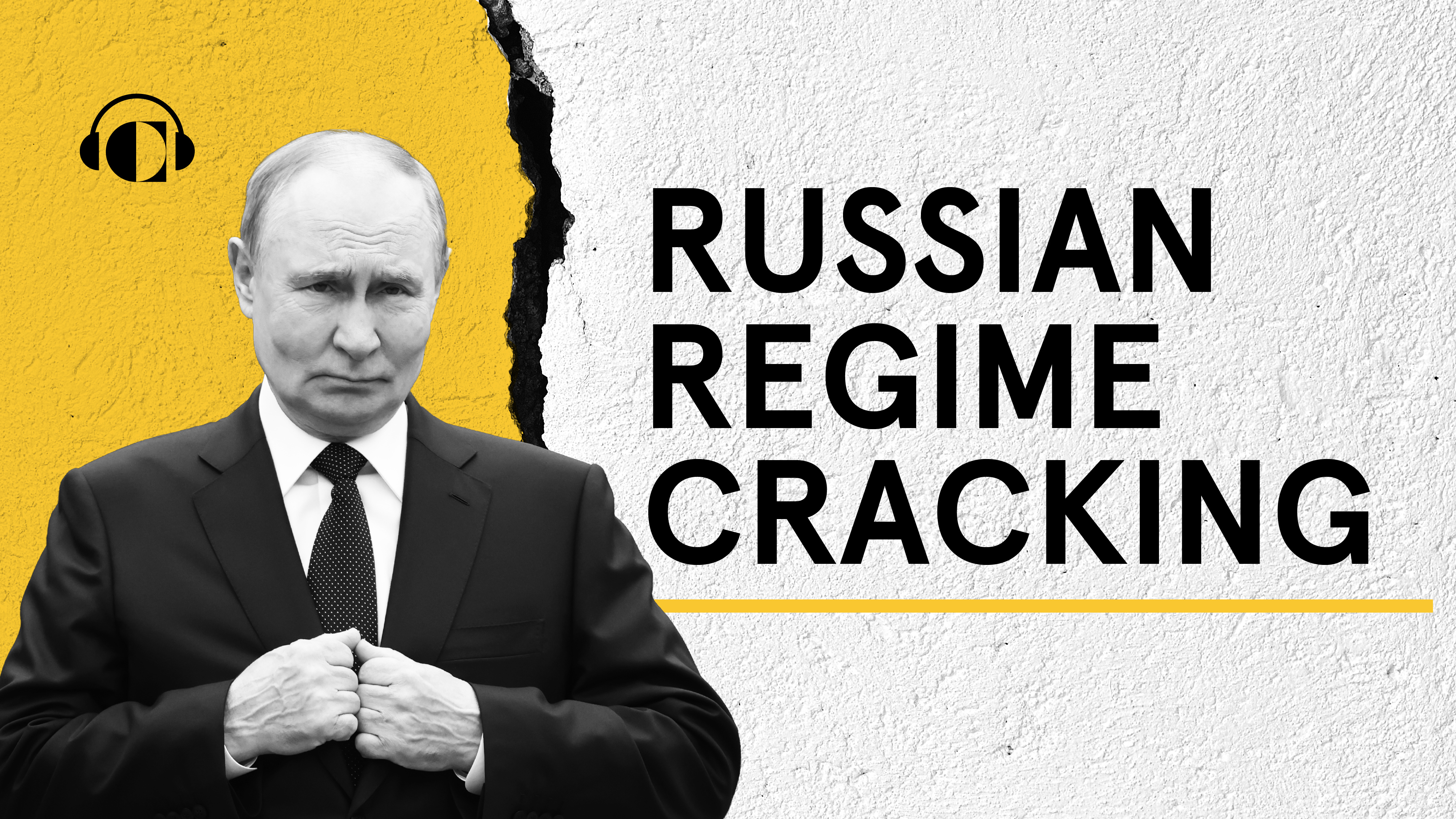
Alexandra Prokopenko, a former Moscow insider who quit over the Ukraine War, says that Vladimir Putin has lost focus on running the country. She joins Jon Bateman on The World Unpacked to explain the erosion of Russia’s social contract and share stories from her new book From Sovereigns to Servants: How the War Against Ukraine Reshaped Russia’s Elite.

Jon Bateman, Alexandra Prokopenko

Javier Corrales and host Jon Bateman discuss Cuba’s economic vulnerability, its political staying power, and why Trump might wind up making a deal with the Castros very similar to one made by Barack Obama.
Jon Bateman, Javier Corrales

Nick Pickles battled bots at Twitter and is now chief policy officer at Tools for Humanity, the Sam Altman-founded startup that reads eyeballs with an Orb.

Jon Bateman, Nick Pickles

On this episode of The World Unpacked, authors Quinn Slobodian and Ben Tarnoff explore Musk’s historical meaning and debate the politics of technocracy with host Jon Bateman.
Jon Bateman, Ben Tarnoff, Quinn Slobodian